The Rare Earth Boom
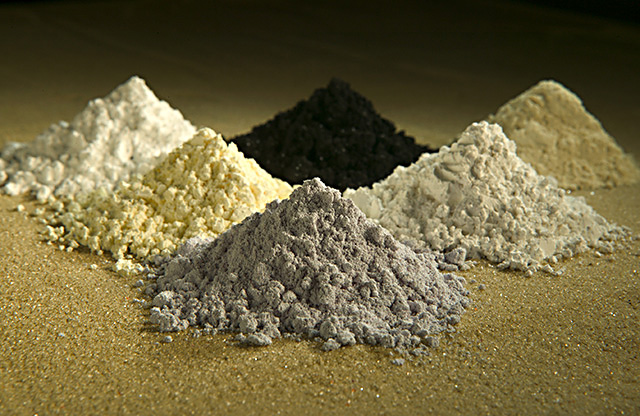
Rare earth elements (REEs) or rare earth metals are of vital importance to the production of batteries for hybrid and electric cars, catalytic converters, flat panel displays, jet engines, certain missile systems and wind turbines with high strength magnets. They are also used in oil refining, medical devices and other more secretive technologies. A Toyota Prius hybrid contains roughly 85 pounds or 40 kilos of REEs.
There are 17 rare earth elements I concern myself with, yttrium, scandium and 15 which are in the lanthanide group (listed beside end use):
lanthanum - hybrid engines and metal alloys
cerium - petroleum refining, metal alloys and auto catalysts
praseodymium - magnets
neodymium - hybrid engines, auto catalyst, petroleum refining, laptops and headphones
promethium - nuclear batteries
samarium - magnets
europium - color display screens
gadolinium - magnets
terbium - permanent magnets, phosphors
dysprosium - hybrid engines, permanent magnets
holmium - lasers
erbium - phosphors
thulium - x-ray units
ytterbium - lasers, steel alloys
lutetium - catalysts for petroleum refining
REEs are in a production deficit with annual world demand estimated at 135,000 tons and annual production estimated at 125,000 tons. The United States currently has no REE mines in operation and in turn is forced to import 100% of it's REEs. China controls over 95% of the production and has an infrastructure to continue this for some time. China also has over 60% of the REEs stockpiles in the world and have rumored at plans to restrict exports through tariffs and reducing mining production (with intent of driving the prices up).

A great opportunity awaits while governments and investors are unwilling to address the issue with the due immediacy. Though any individual mine could take 10 years or more to produce REEs the companies exploring, mining and producing REEs will be in great demand and will have a most likely have a good stream of capital for further expansion. Within 5 years it is rational to expect China to be close to deficit in supply of REEs, other sources must be found and utilized if the "Green Revolution" is to take place.
The United States, China, India, South Africa, Canada, Brazil, Malaysia, and Australia have large known deposits. The stockpiles of REEs are controlled, for the most part, by China (60%), The US (9%) and Russia (14%).

I just like the valuable info you provide for your articles.
ReplyDeleteI'll bookmark your weblog and test once more right here regularly. I'm
slightly certain I'll be informed many new stuff proper here! Good luck for the next!
Look at my page; artipot.com
Now I am going away to do my breakfast, when having my breakfast coming yet again to
ReplyDeleteread other news.
Look at my site; foreigner loan